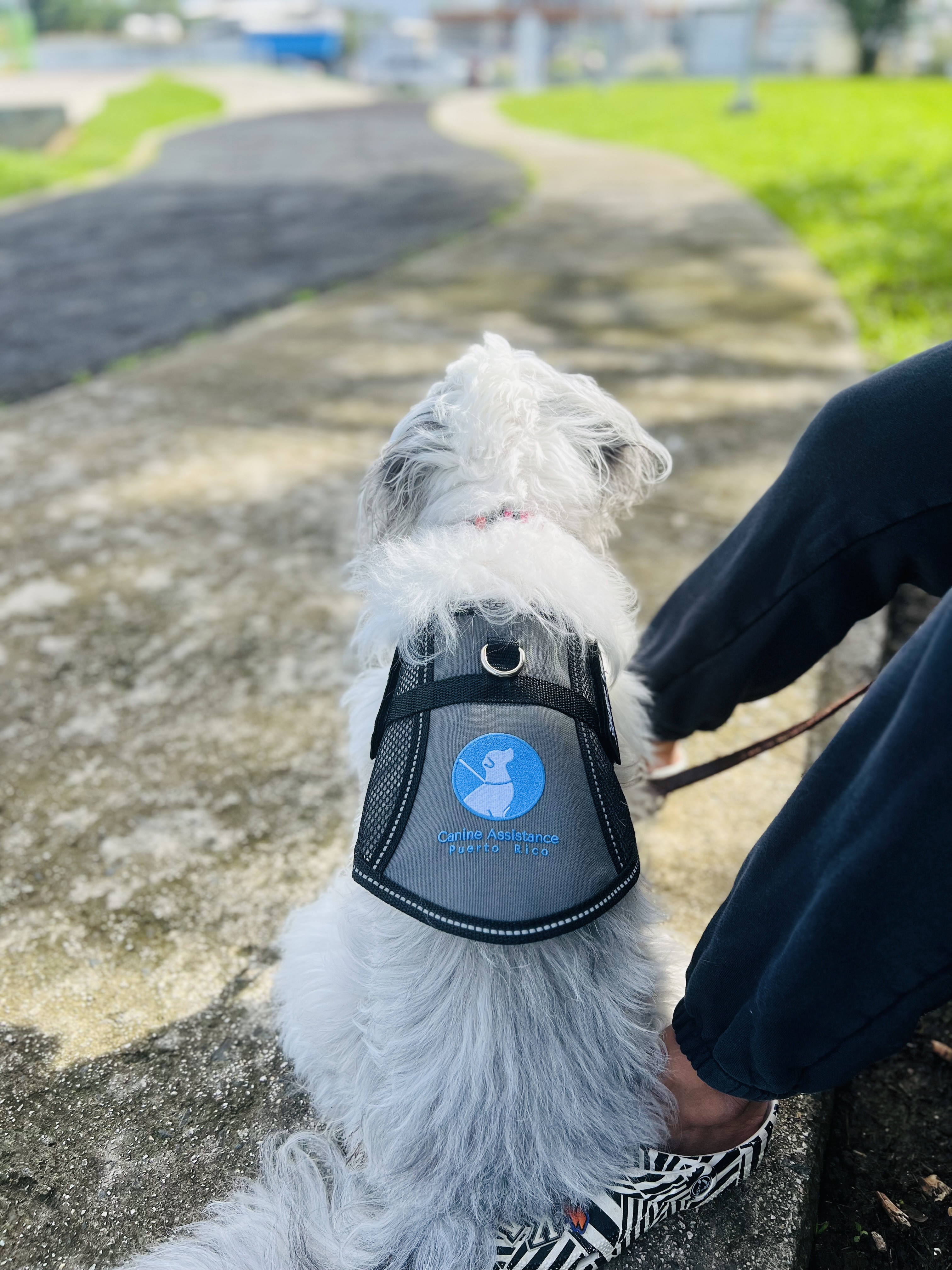
This is what the standard looks like.
What this actually is
Access stops depending on paperwork and hope.
Now a days after COVID anywhere you take a working dog, somebody else decides what good enough looks like. A shop manager. An airline gate agent. A hospital corridor at seven in the morning. You do not get to set that standard and you do not get to argue with it on the day. And none of it matters as long as you have a dog whom is mitigating symptoms. This is the difference between a service dog and a pet. A service dog does both well. While a pet is going chaotic. Your dog can get banned and you fined.
Owner training means the person the dog trusts most is the one who builds him to it. It is slower than sending him away to somebody else, and it holds up better under pressure, because the working relationship is already there before the work starts.
Read this before you spend money anywhere
Nobody can certify your dog.
There is no federal certification and no federal registry. No certificate, no ID card and no vest grants a dog public access, and every website selling you one is selling you nothing.
Our vest is not for sale and it never will be. Teams earn it inside the program, which is the only reason it means anything when you put it on.
Access rests on two things. The handler has a disability, and the dog is individually trained to do work or perform tasks related to mitigate it, while behaving safely in public. If what you want is only a way to fly with your pet, this is not the program for you.
We verify your dog's training. We prepare you both as a team.
Walk away from any program that promises you access, sells you your pet can fly, offers to train the dog for you, mentions a loophole, or trains with a prong or shock collar. None of those promises can be kept by anyone, including us. A dog trained with aversive equipment does not meet a behaviour standard in the first place, so there is no loophole to take.
The part most programs leave out
Not every dog can do this work.
Temperament rules dogs out, and so does over excitement. So does noise sensitivity, so does a health issue that shows up at eighteen months, and so does a genuine dislike of strangers that no amount of good handling changes. None of that is the dog's fault and none of it is yours.
Stress shows up in a dog's behavior and it shows up in her body, and a dog carrying it day after day cannot do this work reliably no matter how much anyone wants her to.
Any true program keeps checking as you go rather than at the end when you have already spent a year on it. If your dog is not suited, I would rather tell you in month two than let you find out in month fourteen.
A dog who cannot do public access work is not a failed dog. He is a dog who is going to have a much better life not doing it, and who often makes an excellent emotional support animal instead.
Before you apply
This comes last, not first.
Every team here finishes the earlier parts before they get to this one. That is not a sales sequence, it is the order the skills go in.
A dog who cannot yet walk on a loose leash, or pass another dog nicely on a quiet street, is not ready to be assessed by a stranger in a busy one. Putting him in that room early is how good dogs get written off before they had a chance to succeed.
If you are at this point, start at the sniff walk. It is free and it is the actual first step.
See what the three parts cover
We have to help our dog first, before they will help us.
The standard
What a working team has to be able to do.
Two things get assessed, and they are separate. Behavior in public, and the specific work the dog does for you.
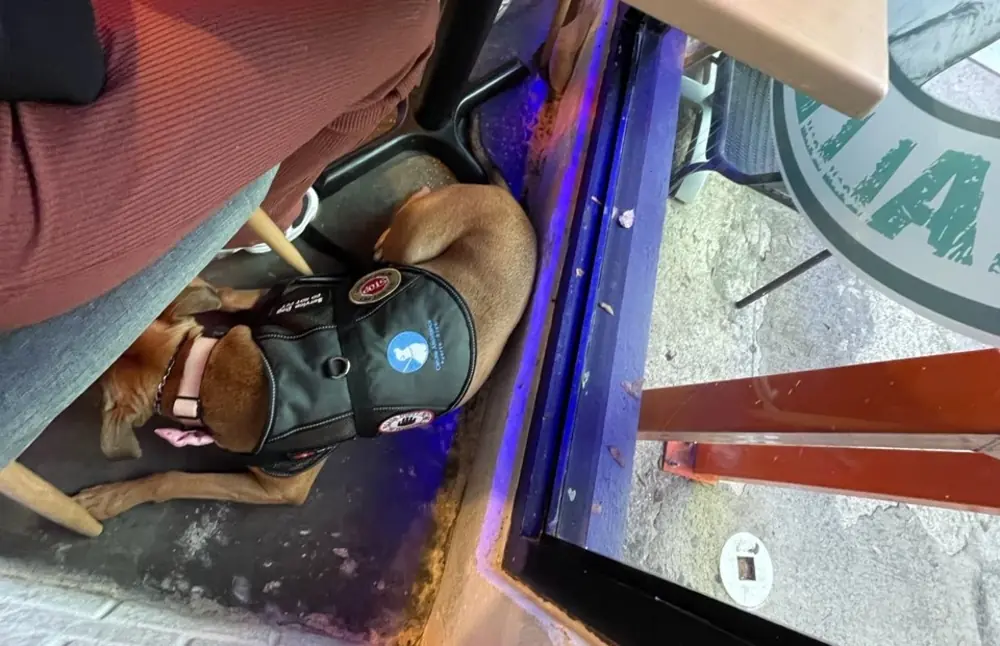
Behavior in public
Settles under a table. Ignores food on the floor, other dogs, and people who want to say hello. Does not vocalize, does not solicit attention, does not leave your side to say hello.
The work she does
Trained tasks tied directly to a medical condition. Relief from fear, anxiety, flashbacks, nightmares, hyper-vigilance, or hyper-activity. These are the tasks we train, and they are most common in Post Traumatic Stress Disorder.
Both, on a bad day
Not on a quiet Tuesday when everyone is rested. The standard is what holds when the airport is full and you are already struggling.
Health clearance from your veterinarian is required before assessment, and reassessment continues throughout rather than happening once at the end.
Where it happens
In person, in Puerto Rico.
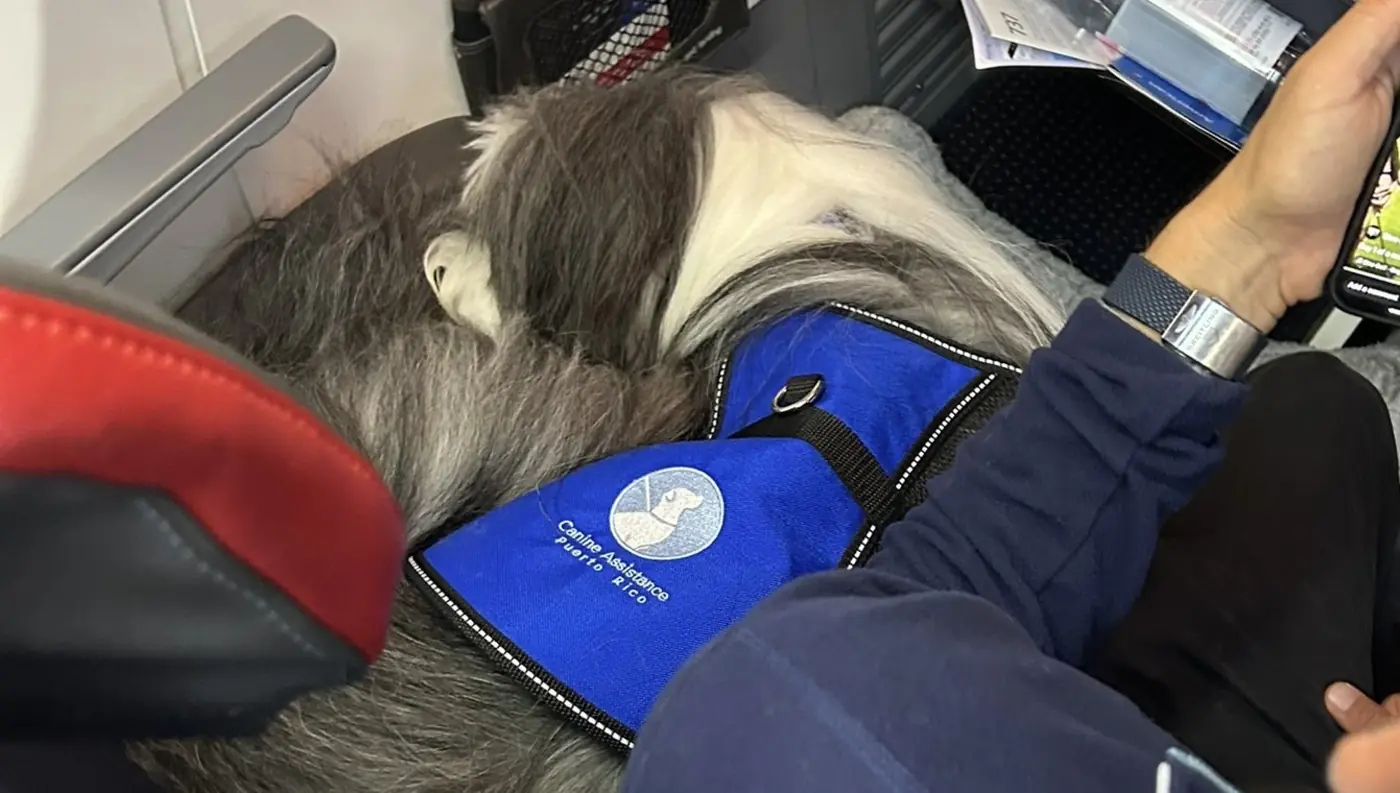
The earlier parts run live online, and handlers join them from across the United States, Canada and Europe from their living rooms. This part does not, because public access work has to be assessed in public, with the actual handler and the actual dog, in an actual room, working together.
If you cannot get to Puerto Rico for six weeks, the answer is that this particular program is not going to work for you, and I would rather say that here than after you have applied.
One thing I cannot do
I am not the person who decides whether you need one.
I train people to train their own dogs. Whether a service dog is the right support for your condition is a conversation for yourself or between you and your own healthcare provider, and it should happen before you apply rather than after. If you do not have one yet, that assessment begins in phase one of training, not over the phone.
Bring that decision with you. What I can tell you is whether the dog in front of me can be built to the standard, and how long it is likely to take.
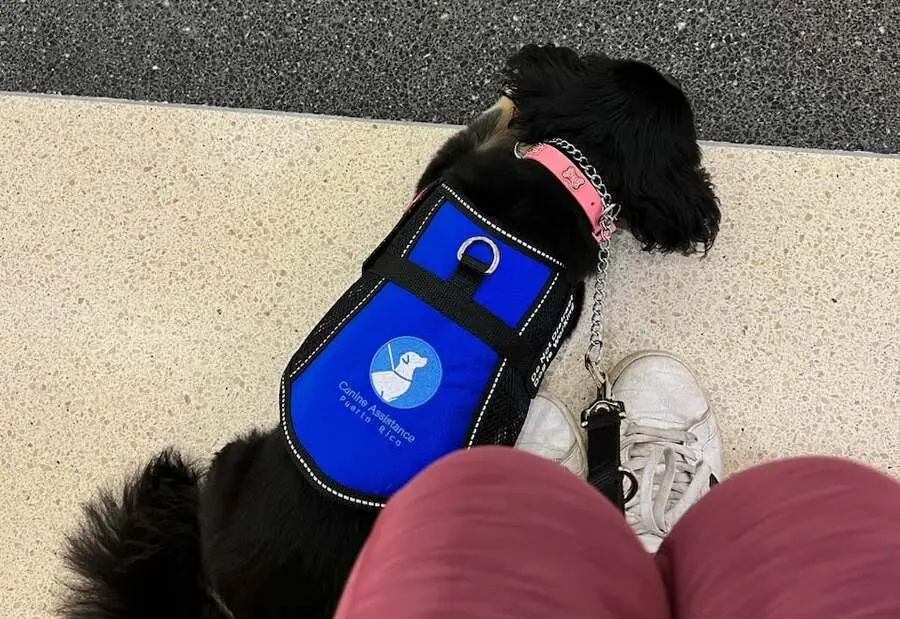
Straight answers
The three questions everybody asks.
Is there such a thing as service dog certification or registration?
There is no federal certification and no federal registry. The federal government has never approved any form, vest, patch or ID card that proves a dog is a service animal, and documentation sold online confers nothing. Some local state governments do run voluntary registration programs, which exist for practical reasons such as a reduced licence fee. They are optional and they grant no access rights. Access rests on the handler having a disability and the dog being individually trained to do actual work or tasks related to mitigate it, while behaving safely in public. Not a protection trained dog, and not a dog whose presence simply makes you feel better. That last one is emotional support, which is a different thing with different rights.
Can I train my own service dog instead of buying a trained one?
Yes. Owner training is legal in the United States and it is what this program is built on. It is slower than buying a program dog, and it produces a team whose working relationship already exists, because the person the dog trusts most is the one doing the training.
Will my dog definitely make it?
No, and anybody who tells you otherwise is guessing or selling. Temperament, health, over excitement, sociability, and noise sensitivity rule dogs out through no fault of the dog or the handler. You will be told early rather than late, and a dog who cannot do this work is going to have a better life not doing it.
Apply for Service Dog Owner Training.
For teams who have completed the earlier parts. Applications open by intake.